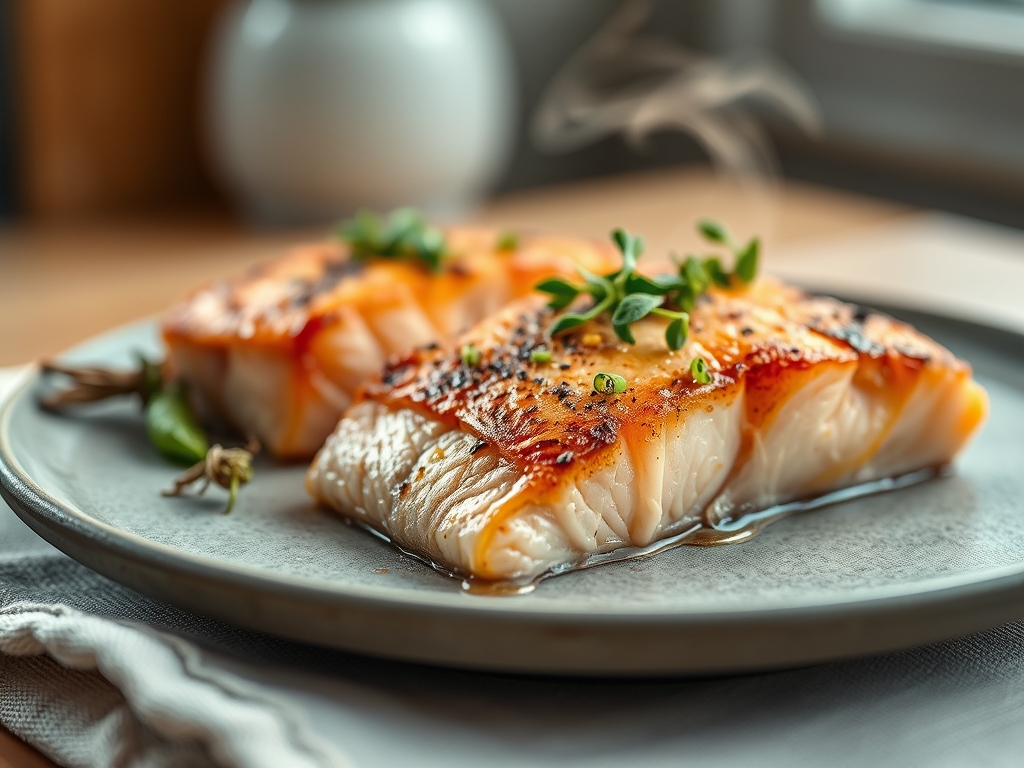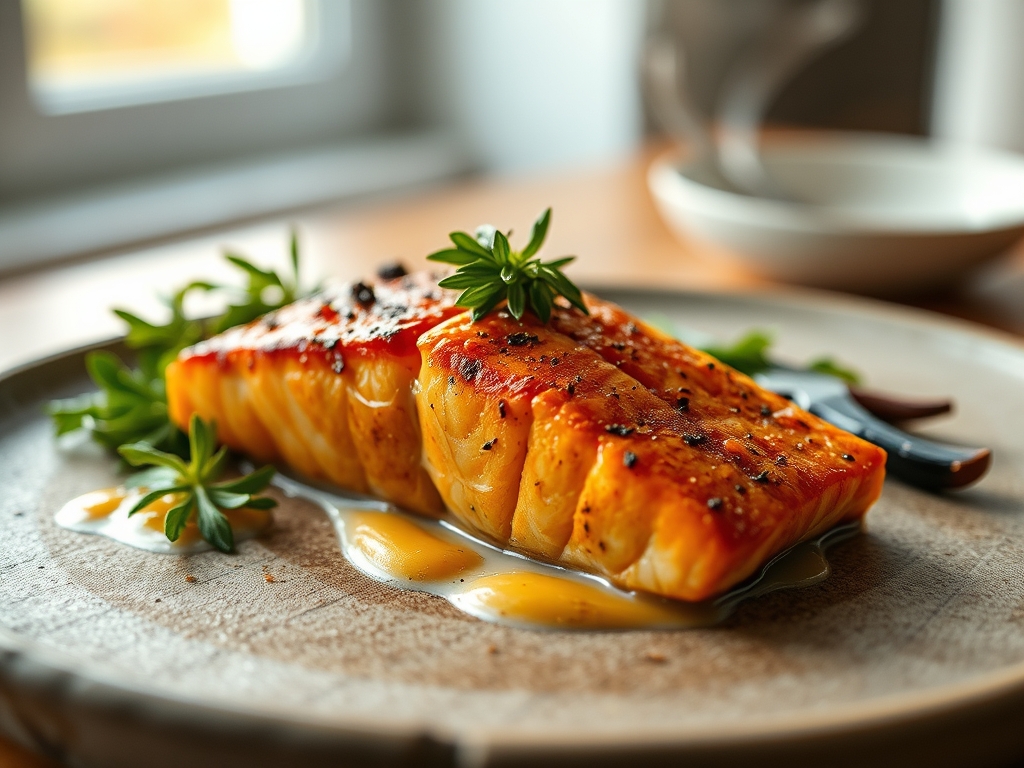
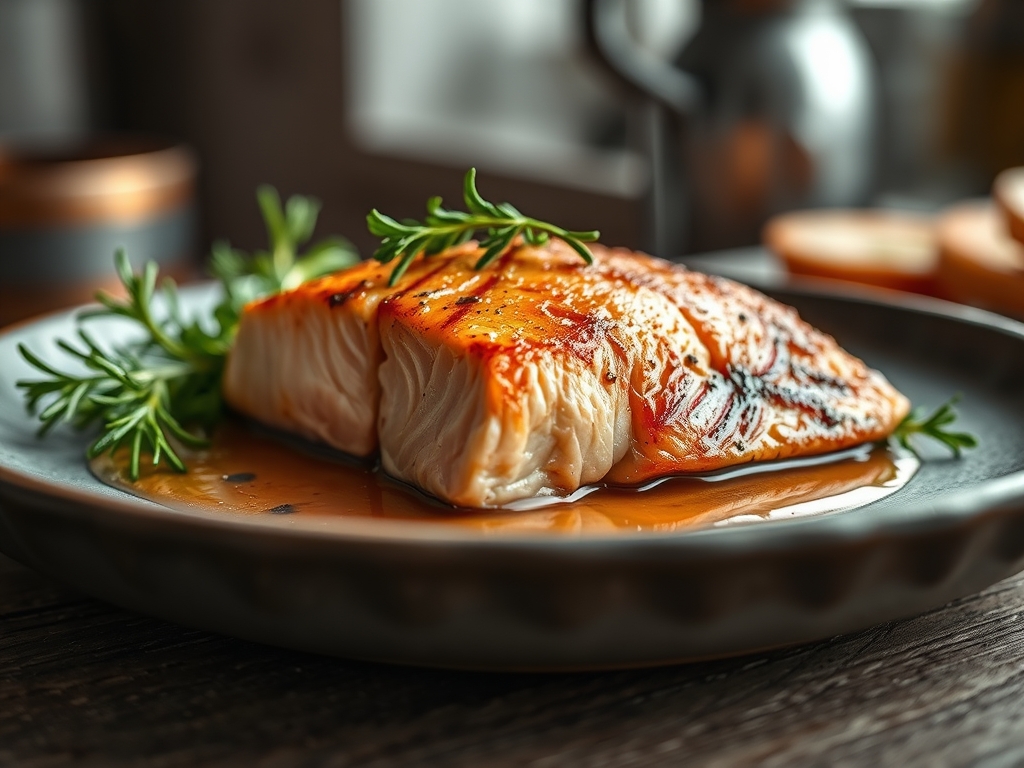
Picture the sound of a heavy-bottomed stainless steel skillet meeting a cold burner. Now, imagine the high-frequency hiss as a dry, cold fillet of King salmon hits shimmering oil. That sound is the overture to the best meal of your life. We are chasing that elusive, glass-like crust and a center so buttery it practically sighs under your fork. When you master these damn delicious salmon recipes, you are not just cooking; you are conducting a symphony of thermal physics and amino acid rearrangements. Most people treat salmon like a delicate flower, but I am going to teach you how to treat it like the robust, fatty powerhouse it actually is. We are moving past the "grey, sad fish" era and into a world of high-gloss glazes and perfect internal gradients.
The secret to restaurant-quality results is not a hidden ingredient; it is the mastery of moisture control and heat transfer. We are looking for that specific moment where the subcutaneous fat renders out, basting the flesh from the inside. This is the difference between a meal you eat for fuel and a meal you remember for a decade. Grab your apron and your favorite digital scale. We are about to dive deep into the chemistry of the perfect sear, the logic of the brine, and the art of the finish.
The Gathers:
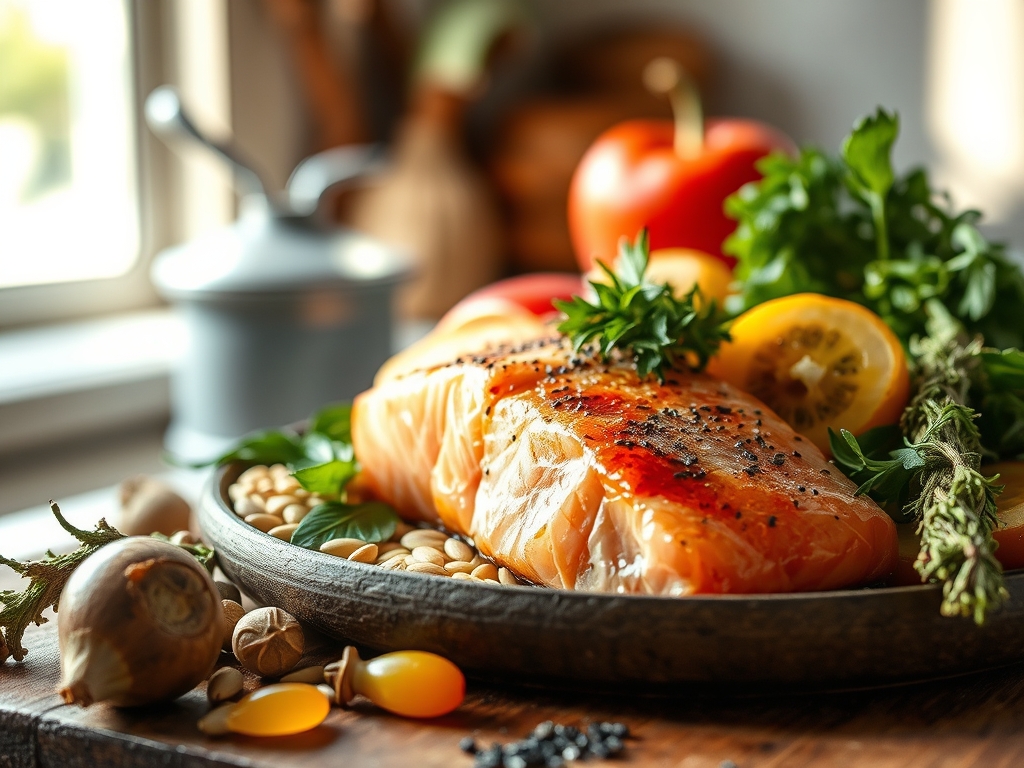
To execute these damn delicious salmon recipes, your mise-en-place must be precise. Start with center-cut fillets, ideally six to eight ounces each. You want uniform thickness to ensure the thermal energy penetrates the protein at a consistent rate. Look for vibrant, translucent flesh; if it looks matte or opaque while raw, the cellular structure has already begun to degrade.
You will need high-smoke-point fats like avocado oil or clarified butter (ghee). Avoid extra virgin olive oil for the initial sear, as its low smoke point will create bitter, acrid compounds before the fish is done. For the aromatics, gather fresh thyme, garlic cloves with the skins on to prevent burning, and a high-quality sea salt like Maldon for finishing.
Smart Substitutions:
If you cannot find wild-caught sockeye, a high-quality farmed Atlantic salmon offers a higher fat content, which is more forgiving for beginners. Instead of honey for glazes, try maple syrup for a more complex profile of woodsy phenols. If you are out of fresh lemons, a splash of white balsamic vinegar provides the necessary acidity to cut through the viscous fats without the harshness of plain distilled vinegar. Use a microplane to zest your citrus; this ensures you only get the oil-rich flavedo and none of the bitter white pith.
The Clock: The Chef's Flow
Efficiency in the kitchen is about managing "dead time." Total prep for these recipes is roughly 15 minutes, with a cook time of 8 to 12 minutes depending on thickness. However, the "Chef's Flow" dictates that you start your side dishes (like a quick reduction in a saucier or roasted asparagus) before the fish ever touches the pan.
Salmon is a "last-minute" protein. It requires your undivided attention for those final six minutes. Allow 10 minutes for the fish to come to room temperature before cooking; this prevents the "thermal shock" that causes the muscle fibers to contract violently and squeeze out moisture. Finally, factor in a 3-minute rest period. This allows the internal temperature to stabilize and the juices to redistribute, ensuring your first bite is as succulent as the last.
The Masterclass:
1. The Dry Brine Technique
Generously season your fillets with salt at least 15 minutes before cooking. Place them on a wire rack over a sheet pan to allow air to circulate around the entire protein.
Pro Tip: This process uses osmosis to draw moisture out, dissolve the salt, and then pull that seasoned brine back into the center. It seasons the fish deeply while drying the surface for a superior sear.
2. The Skin-Side Strategy
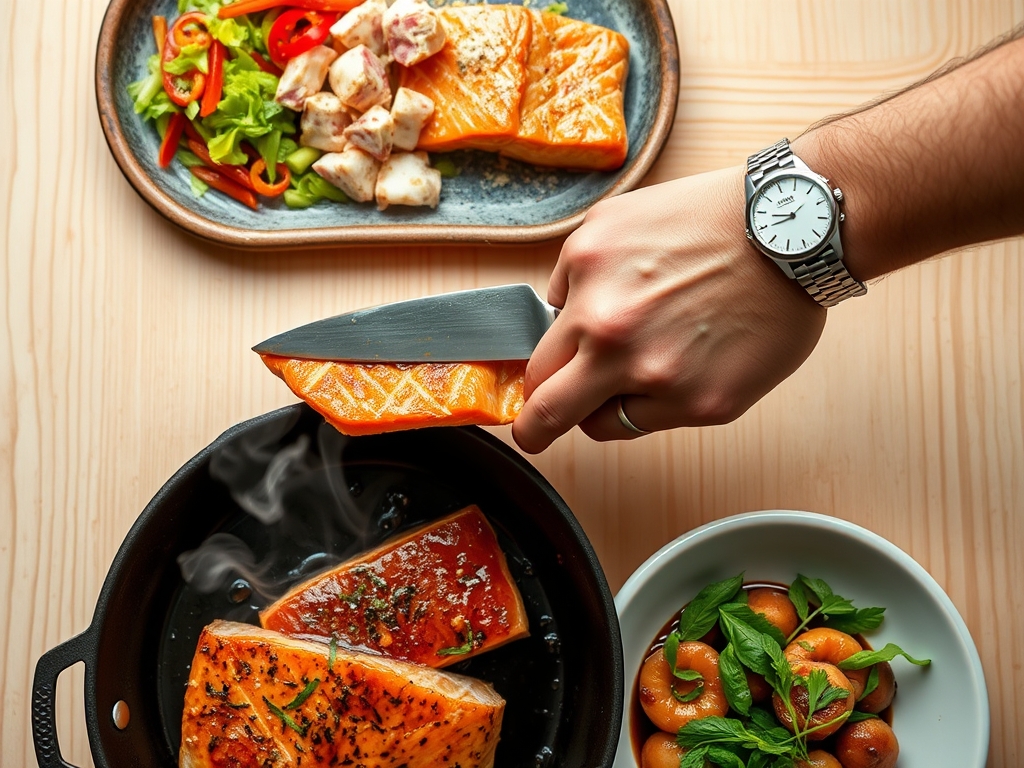
Place the salmon skin-side down in a cold, dry, heavy-bottomed skillet, then turn the heat to medium-high. Use a flexible fish spatula to press down firmly for the first 30 seconds.
Pro Tip: Starting in a cold pan allows the fat in the skin to render slowly. This prevents the skin from curling and ensures it becomes shatteringly crisp rather than rubbery.
3. The Maillard Reaction
Once the skin is crisp, flip the fish gently using tongs. You are looking for a golden-brown crust on the flesh side. Do not move the fish until it releases naturally from the pan.
Pro Tip: The Maillard Reaction occurs between amino acids and reducing sugars at high heat. If you flip too early, you lose those complex, savory flavor compounds that define a professional sear.
4. The Butter Baste
In the final two minutes of cooking, add a knob of cold butter, crushed garlic, and thyme to the pan. Tilt the skillet and use a large spoon to continuously drench the salmon in the foaming fat.
Pro Tip: This is called arrosé. The hot fat carries the fat-soluble compounds from the aromatics directly into the fish, while the milk solids in the butter undergo further browning for a nutty finish.
5. Managing Thermal Carryover
Remove the salmon from the heat when the internal temperature hits 125 degrees Fahrenheit for medium-rare. Place it on a warm plate, not a cold one.
Pro Tip: Thermal carryover means the internal temperature will continue to rise by 5 to 7 degrees after removal. Pulling it early prevents the albumin (the white protein "gunk") from pushing out.
6. The Acidic Deglaze
While the fish rests, use a splash of dry white wine or lemon juice to scrape up the browned bits (fond) from the bottom of the pan. Whisk in a teaspoon of cold butter to create an emulsion.
Pro Tip: This creates a pan sauce using the concentrated flavors left behind. The acid balances the heavy fats, providing a bright, piquant finish to the dish.
7. The Resting Phase
Let the salmon sit undisturbed for three to five minutes. This is the hardest part, but it is the most critical for texture.
Pro Tip: Resting allows the viscosity of the internal juices to increase as they cool slightly, meaning they stay inside the fish when you cut into it rather than spilling onto the plate.
8. The Finishing Touch
Use your microplane to grate fresh lemon zest over the top and finish with a sprinkle of flaky sea salt. The contrast in texture is everything.
Pro Tip: Flaky salt provides localized bursts of salinity that stimulate the palate without over-seasoning the entire bite, making the flavor profile feel more dynamic.
The Deep Dive:
Macro Nutrition: Salmon is a nutritional titan. A standard 6-ounce serving provides roughly 34 grams of high-quality protein and 22 grams of fat, most of which are heart-healthy Omega-3 fatty acids. It is naturally low in sodium and contains zero carbohydrates, making it a staple for metabolic health.
Dietary Swaps:
- Vegan: Swap the salmon for a thick slab of "Lion's Mane" mushroom or a "Tofu Fillet" pressed and marinated in beet juice and dulse flakes for a "fishy" umami.
- Keto: This recipe is naturally keto-compliant. Increase the butter baste for higher fat macros.
- GF: Ensure your "Smart Substitutions" like soy sauce are swapped for tamari or coconut aminos to keep the glaze gluten-free.
The Fix-It:
- The Skin is Soggy: You likely didn't dry the skin enough or the pan wasn't hot enough. Fix: Remove the fish, wipe the pan, add fresh oil, and sear the skin side again briefly at high heat.
- The White Gunk (Albumin) Appeared: You overcooked it or cooked it too fast. Fix: Gently scrape it off with a knife before serving; it is harmless but indicates the muscle fibers contracted too tightly.
- The Glaze is Burnt: You added the sugar-based glaze too early. Fix: Deglaze the pan with a little water or stock to loosen the bitterness, then finish with a fresh squeeze of lime to mask the char.
Meal Prep: To reheat salmon without it turning into a brick, use the "Low and Slow" method. Place it in a 275-degree oven with a tablespoon of water or broth, covered tightly with foil. This creates a steam chamber that gently rehydrates the protein.
The Wrap-Up:
You are now equipped with the technical prowess to turn a simple piece of seafood into a culinary masterpiece. Remember, cooking is as much about the "feel" as it is the "formula." Listen to the sizzle, watch the color change up the side of the fillet, and trust your instincts. These damn delicious salmon recipes are your gateway to becoming the most confident cook in your circle. Go forth, deglaze that pan, and enjoy the buttery, crispy fruits of your labor!
The Kitchen Table:
How do I stop salmon from sticking to the pan?
Ensure your pan is hot and your fish is bone-dry. Use a high-smoke-point oil and wait for the protein to naturally release. If it resists the spatula, it is not ready to be flipped yet.
Is it safe to eat salmon skin?
Absolutely. The skin contains the highest concentration of Omega-3s. When seared correctly using the cold-pan method, it becomes a delicious, crispy crackling that provides a necessary textural contrast to the soft, flaky flesh of the fish.
What is the white stuff that comes out of salmon?
That is albumin, a liquid protein that solidifies when heated. While safe to eat, it usually means the salmon was cooked too quickly or to an internal temperature that was too high, causing the muscle fibers to contract.
How can I tell if salmon is done without a thermometer?
Gently press the top of the fillet with a fork or your finger. If the flakes begin to separate (lamellae) and the meat offers slight resistance rather than feeling "squishy," it is likely at a perfect medium-rare to medium.