Imagine the scent of caramelized sugars wafting through your kitchen as a humble tuber transforms into a golden masterpiece. Mastering basic sweet potato recipes is the ultimate culinary flex because these root vegetables are versatile, nutrient dense, and surprisingly complex in their chemical makeup. Whether you are roasting, mashing, or frying, the magic lies in the heat.
Sweet potatoes are not just starch; they are a playground for the Maillard reaction. When you apply high heat, the amino acids and reducing sugars react to create hundreds of different flavor compounds. This is why a roasted sweet potato tastes infinitely more sophisticated than a boiled one. We are moving beyond the marshmallow-topped casseroles of the past. We are diving into the science of texture, from the crisp snap of a fry to the velvet silk of a puree.
Grab your favorite apron and clear your counters. We are about to turn these dirt-covered gems into the backbone of your weekly meal prep. By the time we are done, you will understand exactly how to manipulate moisture and temperature to get professional results every single time.
The Gathers:
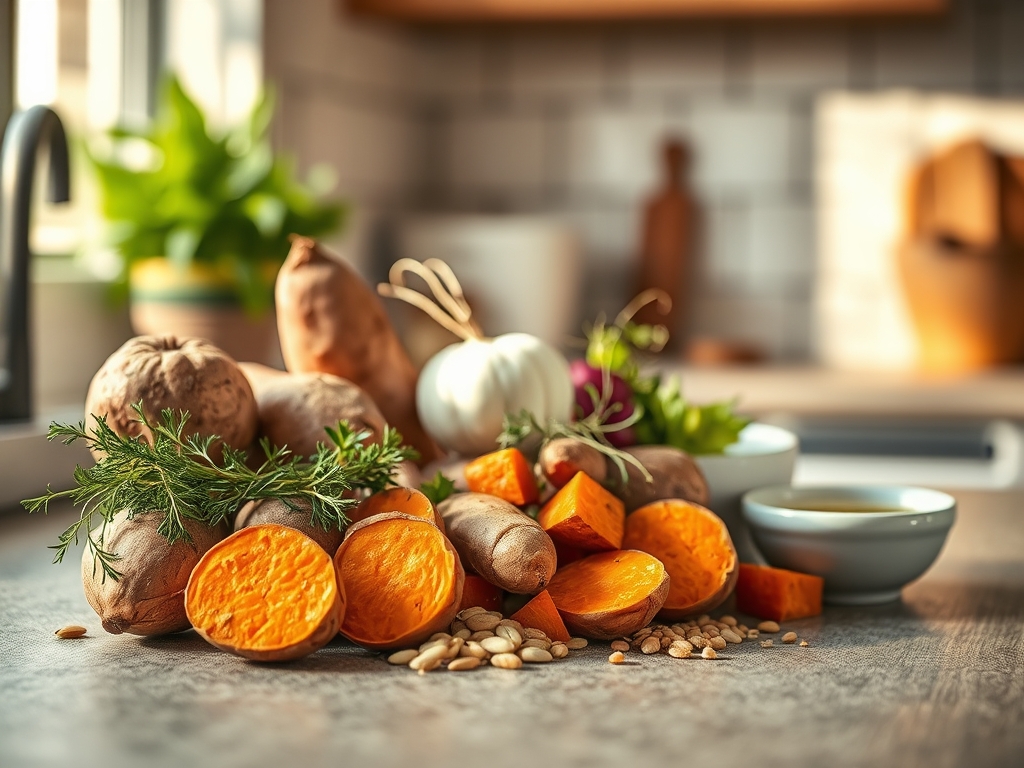
To execute these basic sweet potato recipes with precision, your mise-en-place must be intentional. Start with firm, unblemished Beauregard or Jewel sweet potatoes. These varieties contain a high concentration of amylase, an enzyme that breaks down complex starches into maltose as the potato heats up. You will also need a high-quality fat with a high smoke point, such as avocado oil or clarified butter (ghee), to facilitate heat transfer without burning.
Your toolkit is just as important as your ingredients. Pull out a heavy-bottomed skillet for even heat distribution and a digital scale to ensure your portions are consistent. A sharp bench scraper is essential for moving diced potatoes from the cutting board to the pan without losing those precious, crisp edges. For seasoning, keep flaky sea salt, smoked paprika, and fresh rosemary nearby to infuse the oil with aromatic oils during the cooking process.
Smart Substitutions: If you are looking for a lower glycemic index, swap the orange tubers for Japanese purple sweet potatoes; they are starchier and hold their shape better in stews. If you lack a saucier for making glazes, a small saucepan will suffice, provided you whisk constantly to prevent the sugars from scorching.
The Clock
Efficiency in the kitchen is all about "Chef's Flow." This means grouping tasks to minimize downtime and maximize your thermal carryover. Preheating your oven is the first step; a cold oven is the enemy of a crispy exterior. Expect a total active prep time of 15 minutes, with cook times ranging from 20 minutes for small dice to 50 minutes for whole roasted tubers.
While the potatoes are in the oven, use that "dead time" to prepare your garnishes or whip up a dipping sauce. This prevents the frantic rush at the end of the timer. Remember that sweet potatoes continue to cook for several minutes after being removed from the heat. Factoring in a five-minute rest period allows the internal steam to redistribute, ensuring the center is creamy rather than watery.
The Masterclass
1. The Perfect Roast Dice
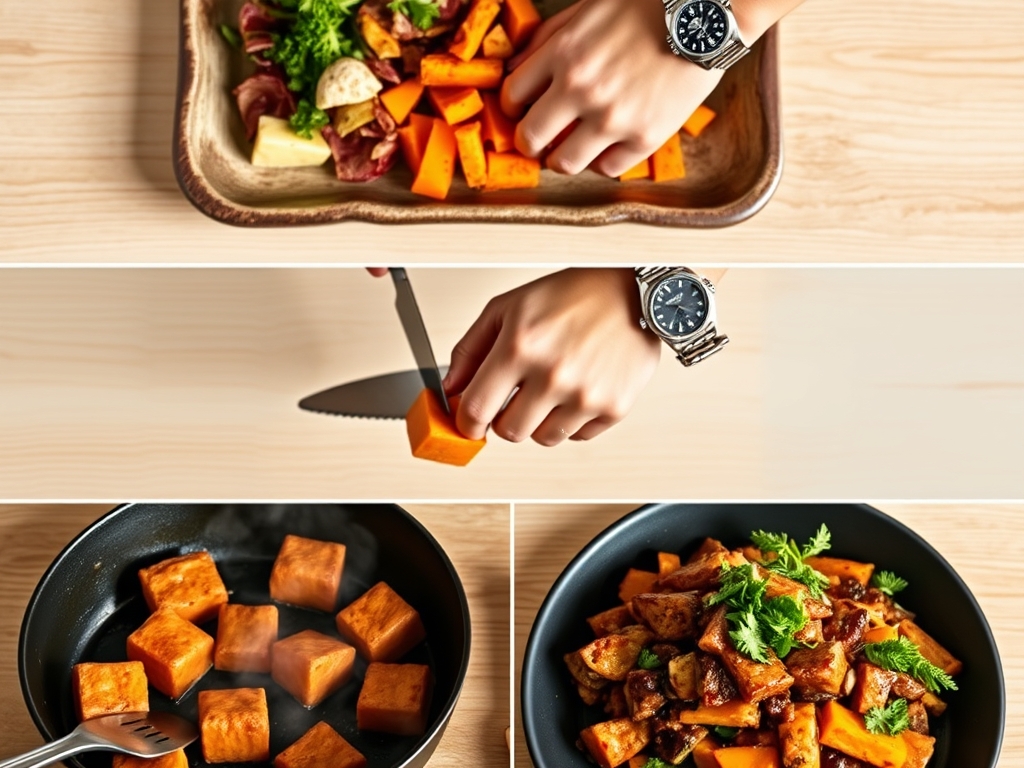
Start by peeling and dicing your potatoes into uniform half-inch cubes using a sharp chef's knife. Toss them in a bowl with oil and salt until every surface is viscous and coated. Spread them on a preheated baking sheet, ensuring they do not touch. Crowding the pan creates steam, which leads to mushy potatoes.
Pro Tip: This relies on the Leidenfrost effect. By preheating the baking sheet, the moisture on the surface of the potato evaporates instantly upon contact, creating a non-stick barrier and a superior crust.
2. The Hasselback Slice
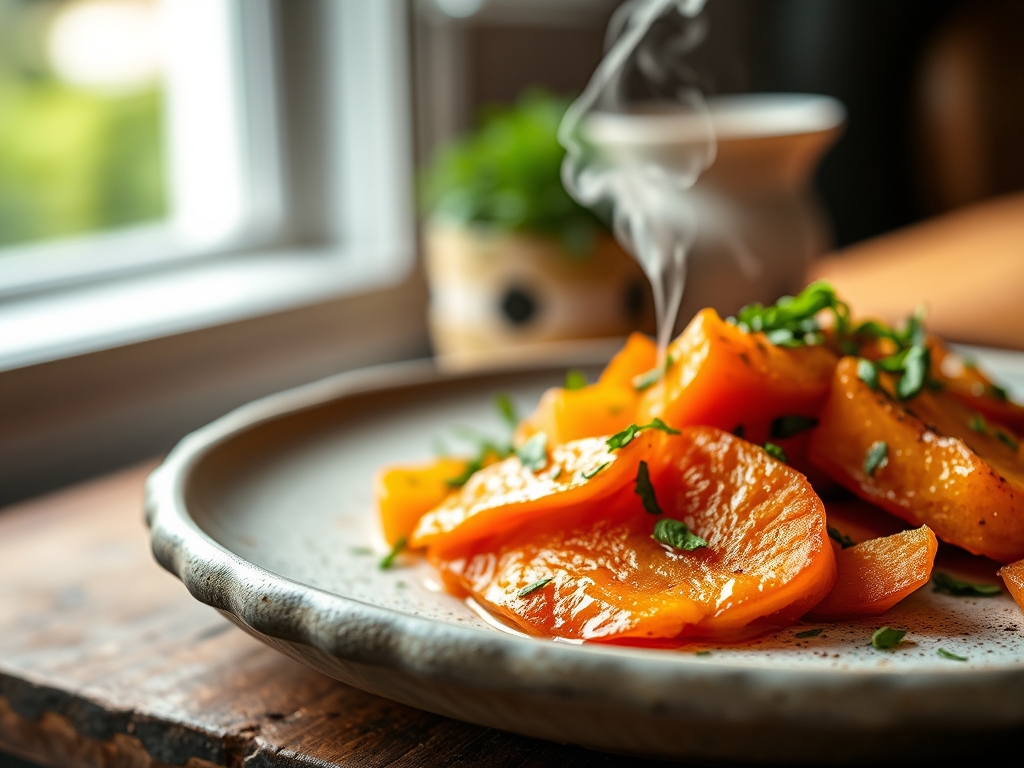
Place the potato between two wooden spoons and slice thin rounds, stopping when the knife hits the spoons. This keeps the base intact. Brush a mixture of melted butter and herbs into every crevice. Bake at 400 degrees Fahrenheit until the edges fan out and turn golden brown.
Pro Tip: Use a microplane to zest citrus over the top during the last five minutes. The heat will render the essential oils from the zest, deeply flavoring the starch without making it bitter.
3. The Silky Puree
Boil peeled chunks in salted water until fork-tender. Drain and pass them through a ricer or food mill into a saucier. Incorporate cold butter cubes one at a time, whisking vigorously to create an emulsion.
Pro Tip: Passing the potatoes through a ricer prevents the development of excess gluten-like starch structures. This ensures the texture remains light and aerated rather than gluey.
4. The Crispy Skin Jacket
Prick whole potatoes with a fork and rub the skins with olive oil and coarse salt. Bake directly on the oven rack. The air circulation allows the skin to dehydrate and crisp while the interior steams in its own juices.
Pro Tip: Pricking the skin allows steam to escape. Without these vents, the internal pressure can cause the potato to burst, a result of rapid vapor pressure buildup.
5. The Sweet Potato Toast
Slice large sweet potatoes lengthwise into quarter-inch planks. Pop them into a standard toaster on the high setting for two or three cycles. Top with avocado or almond butter for a nutrient-dense breakfast.
Pro Tip: This method utilizes infrared radiation to cook the potato quickly. The high heat seals the surface, keeping the interior moist while providing a sturdy base for toppings.
6. The Savory Breakfast Hash
Sauté diced sweet potatoes in a heavy-bottomed skillet with onions and bell peppers. Use a bench scraper to flip the mixture, ensuring the bottom layer gets maximum contact with the pan to develop a deep brown crust.
Pro Tip: Add a splash of apple cider vinegar to deglaze the pan halfway through. The acidity balances the natural sweetness and helps break down the pectin for a softer interior.
7. The Air-Fried Fry
Cut potatoes into batons and soak them in cold water for 30 minutes. Dry them thoroughly before tossing with a tiny amount of oil and cornstarch. Air fry at 380 degrees, shaking the basket every five minutes.
Pro Tip: Soaking removes excess surface starch. This prevents the fries from sticking together and allows the convection heat to create a shatteringly crisp exterior.
8. The Spiralized Noodle
Use a spiralizer to create long curls of sweet potato. Sauté them briefly in a pan with garlic and ginger. These "noodles" cook in under five minutes and provide a wonderful base for piquant sauces.
Pro Tip: Watch for the color change. As soon as the noodles turn a vibrant, translucent orange, they have reached al dente perfection. Overcooking will cause them to lose their structural integrity.
The Deep Dive
From a macro nutrition perspective, sweet potatoes are a powerhouse. They are loaded with Vitamin A (beta-carotene), fiber, and potassium. Because they have a lower glycemic index than white potatoes, they provide a steady release of energy without the dramatic insulin spike.
For dietary swaps, these basic sweet potato recipes are incredibly flexible. To make any dish Vegan, simply swap butter for coconut oil or a high-quality olive oil. For Keto followers, sweet potatoes are generally avoided due to carb counts, but small portions can be worked into a "targeted keto" plan. They are naturally Gluten-Free, making them a safe starch for Celiac-friendly kitchens.
The Fix-It:
- Soggy Fries: You likely crowded the pan or didn't dry the potatoes. Use a wire rack on top of your baking sheet to allow 360-degree airflow.
- Burnt Edges, Raw Middle: Your oven temperature is too high. Drop the heat by 25 degrees and cover the tray with foil for the first half of the bake.
- Bland Flavor: Sweet potatoes need more salt than you think. Season at the beginning and the end to layer the flavor profile.
Meal Prep: To reheat and maintain "day-one" quality, avoid the microwave. The microwave vibrates water molecules, which turns the starch into a rubbery mess. Instead, use a toaster oven or a dry skillet to re-crisp the exterior while gently warming the center.
The Wrap-Up
Mastering basic sweet potato recipes is about more than just filling a plate; it is about understanding the chemistry of your food. From the viscous coating of a well-oiled dice to the infusion of aromatics in a skillet hash, you now have the tools to elevate a simple root vegetable into something extraordinary. Keep your digital scale handy, trust your heavy-bottomed skillet, and never be afraid to experiment with high heat. You have the science; now go make some magic.
The Kitchen Table
How do I stop sweet potatoes from getting mushy?
Ensure you do not crowd the pan. Use high heat (400F+) and a high-smoke-point oil. Soaking cut potatoes in cold water to remove surface starch before roasting also helps create a crispier exterior.
Should I peel sweet potatoes before roasting?
It is a matter of preference, but the skin contains significant fiber and nutrients. If you leave it on, scrub the tuber thoroughly and use a bit of oil to help the skin crisp up during the cooking process.
Why are my sweet potatoes taking so long to cook?
Sweet potatoes are dense. If they are taking too long, your pieces might be too large or your oven temperature too low. Ensure your oven is fully preheated and cut the potatoes into uniform, smaller cubes for faster results.
Can I prep sweet potatoes ahead of time?
Yes. You can peel and chop them up to 24 hours in advance. Store the cut pieces in a bowl of cold water in the refrigerator to prevent oxidation and enzymatic browning before you are ready to cook.