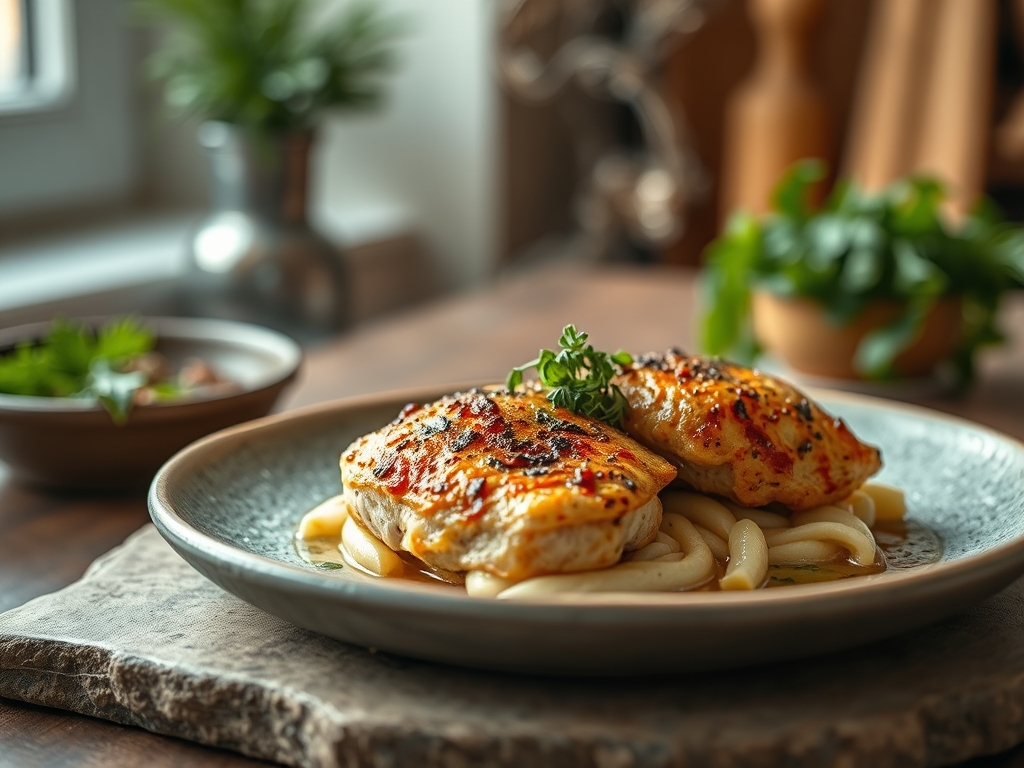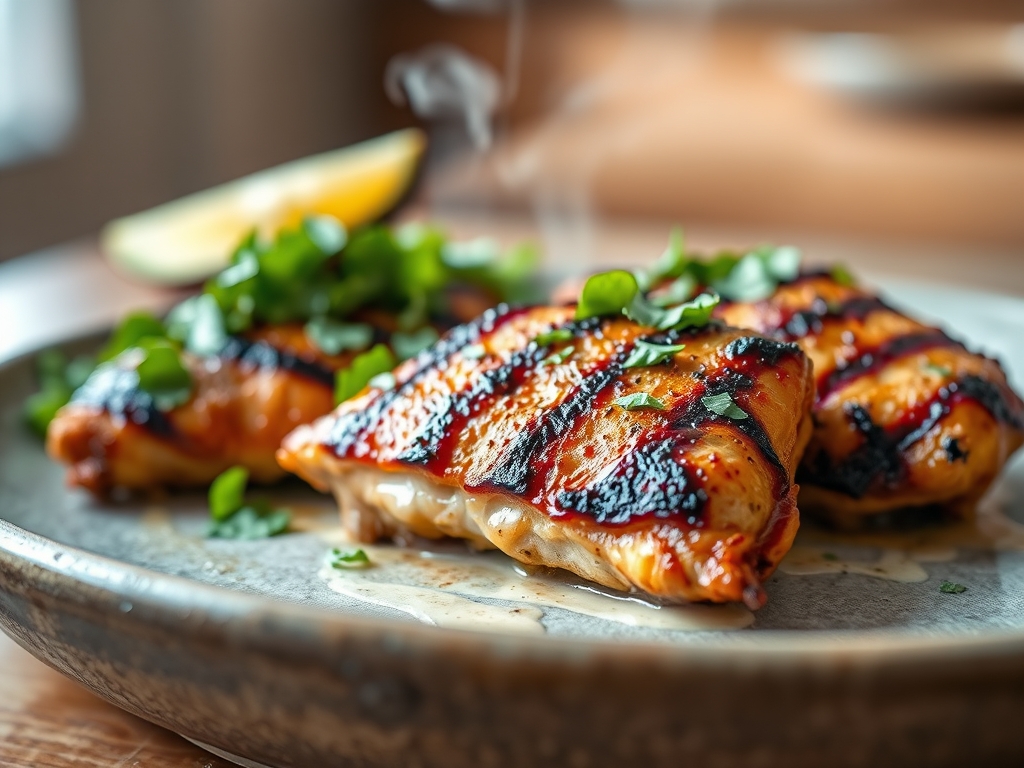
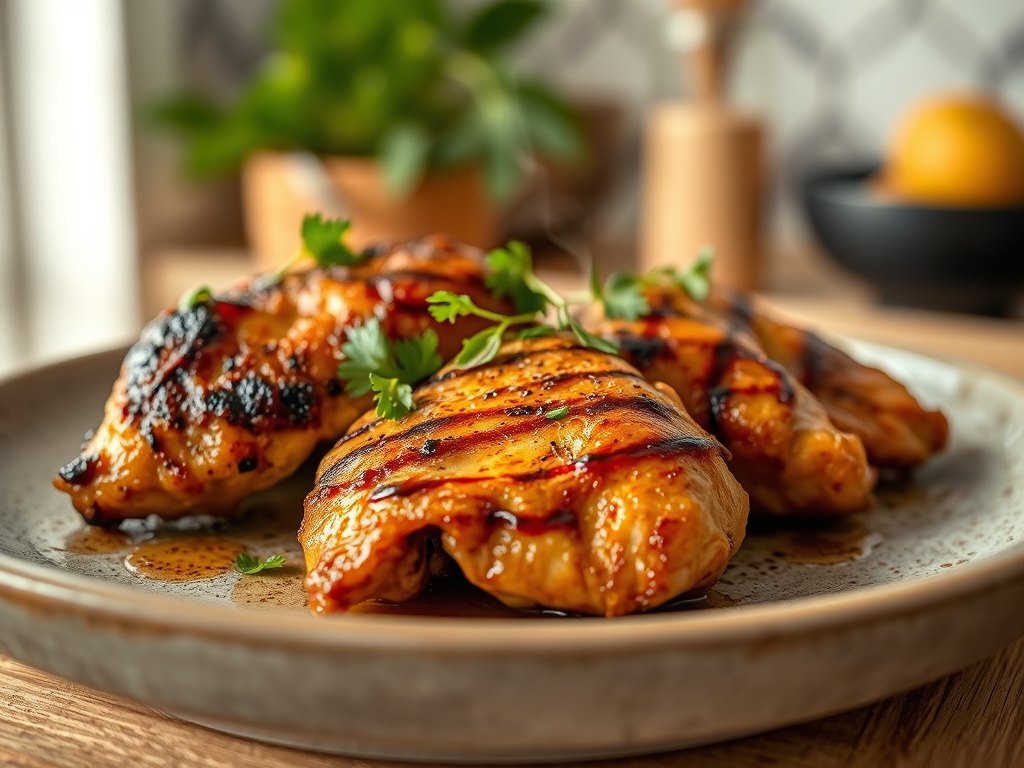
Listen to that sound. It is the distinct, rhythmic crackle of hot lipid meeting protein, a localized thunder that promises a shatteringly crisp crust and a center so succulent it borders on the indecent. When you are hunting for the best air fryer chicken recipes, you are not just looking for dinner; you are looking for a chemical miracle. We are chasing the perfect intersection of rapid convection and the Maillard reaction. This is the art of the crunch. It is about manipulating airflow to mimic the violent heat of a deep fryer without the heavy oil saturation. We are going to deconstruct the traditional breading process and rebuild it using molecular shortcuts that guarantee a golden, glass-like exterior every single time. Forget soggy skin and rubbery edges. We are stepping into the laboratory of the kitchen to master the heat.
The Gathers:
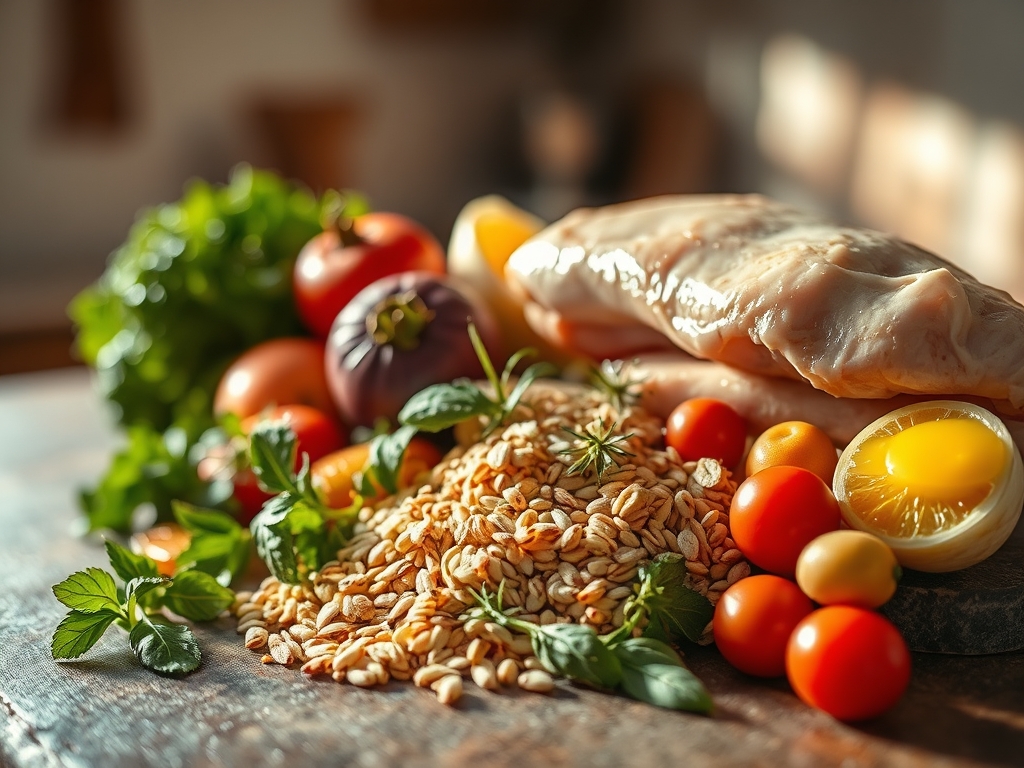
Your mise-en-place is the foundation of your success. Start with high-quality protein; organic, air-chilled chicken thighs are the gold standard here because their intramuscular fat provides the necessary moisture to survive high-velocity air. You will need a digital scale to ensure your dry rub ratios are precise. Gather your aromatics: smoked paprika for color, garlic powder for that savory depth, and a touch of mustard powder to act as an emulsifier.
The secret weapon in our arsenal is cornstarch or potato starch. These starches have a higher amylose content than all-purpose flour, which leads to a crispier, more rigid structure when dehydrated by the air fryer fan. You will also need a high-smoke-point oil in a continuous-spray bottle. Avoid aerosol cans with soy lecithin, as they can leave a gummy residue on your basket.
Smart Substitutions:
If you are avoiding corn, arrowroot powder provides a similar crystalline structure. For a deeper umami profile, swap standard salt for smoked Maldon or a pinch of MSG. If you want a piquant kick, whisk a teaspoon of gochugaru into your dry mix to infuse the crust with a vibrant, smoky heat.
The Clock:
Efficiency in the kitchen is about the Chef's Flow. This is not just about total time; it is about the sequence of operations.
Prep Time: 15 Minutes. This includes the critical "dry brine" phase. Even ten minutes of salt exposure allows the seasoning to penetrate the muscle fibers via osmosis.
Cook Time: 18 to 22 Minutes. This varies based on the wattage of your unit and the density of the meat.
Rest Time: 5 Minutes. This is non-negotiable.
The flow works like this: while your chicken rests in its dry rub, you preheat the air fryer. This ensures that the moment the meat hits the basket, the exterior lipids begin to render immediately. Never place cold meat into a cold machine; you will lose the battle against moisture before it even begins.
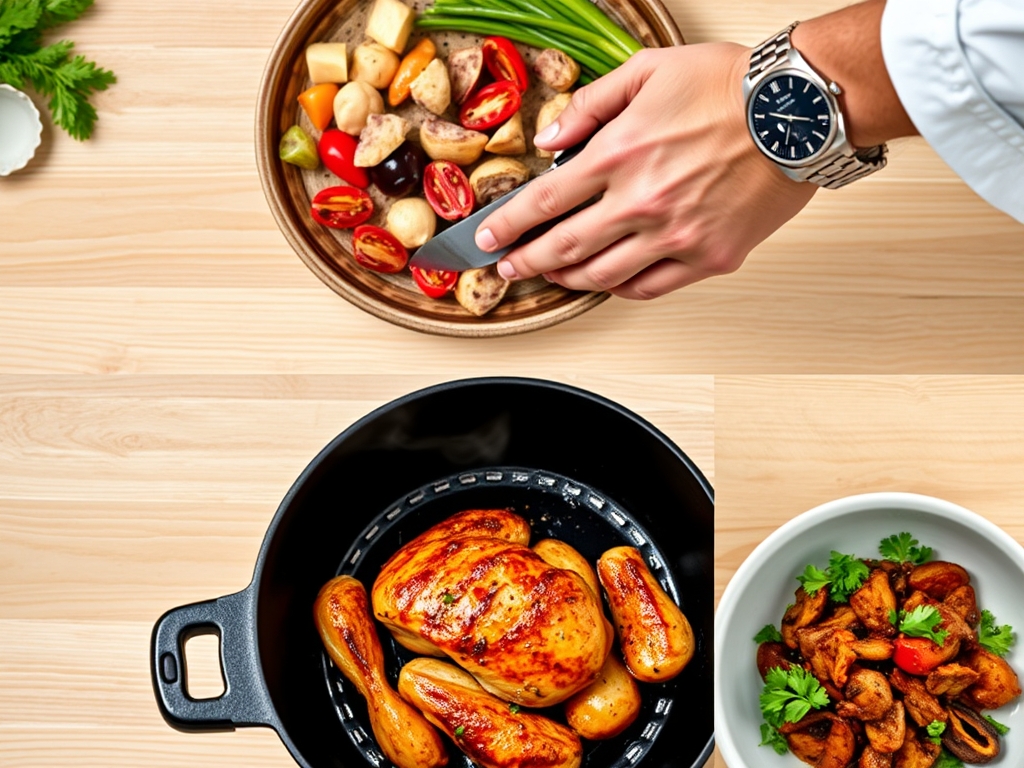
The Masterclass:
1. The Surface Dehydration
Pat every piece of chicken bone-dry using heavy-duty paper towels. Any surface moisture will turn to steam, which acts as a thermal barrier and prevents browning. Use a bench scraper to clear your station of any discarded trimmings.
Pro Tip: This is about latent heat of vaporization. If the air fryer has to spend the first five minutes evaporating surface water, it cannot begin the Maillard reaction, leaving your chicken grey and flaccid.
2. The Starch Infusion
Lightly coat the chicken in your starch and spice blend. Use a fine-mesh sieve to dust the pieces evenly. You want a translucent veil, not a heavy shroud.
Pro Tip: Starch molecules undergo gelatinization when heated with moisture from the meat, then dehydrate into a crisp, porous matrix that captures the moving air.
3. The Oil Atomization
Place the chicken in the basket and spray generously with your high-smoke-point oil. Ensure there are no dry white patches of flour visible.
Pro Tip: The oil acts as a heat transfer medium. Air is a poor conductor of heat compared to fat; the oil ensures the thermal energy is distributed evenly across the irregular surface of the breading.
4. The Convection Blast
Set your fryer to 400 degrees Fahrenheit. Do not overcrowd the basket. Use silicone-tipped tongs to ensure you have at least an inch of space between each piece for maximum aerate potential.
Pro Tip: This is the Bernoulli principle in action. Faster moving air creates lower pressure and higher heat transfer, which is why spacing is the difference between "fried" and "steamed."
5. The Mid-Point Flip
Halfway through the cycle, flip the chicken. This redistributes the rendered fats that have pooled at the bottom of the crust.
Pro Tip: Flipping prevents pooling, where the bottom of the chicken becomes saturated in its own juices, compromising the structural integrity of the lower crust.
6. The Internal Temp Check
Use a digital instant-read thermometer to pull the chicken when it hits 160 degrees Fahrenheit.
Pro Tip: Thermal carryover will bring the internal temperature up to the safe 165-degree mark while the meat rests, preventing the protein fibers from tightening and squeezing out all the juice.
7. The Resting Phase
Transfer the chicken to a wire cooling rack placed over a baking sheet. Do not rest it on a flat plate or paper towel.
Pro Tip: Placing hot chicken on a flat surface creates condensation underneath. A wire rack allows air to circulate, maintaining the "day-one" crunch on all sides.
8. The Acid Finish
Just before serving, use a microplane to zest a fresh lemon over the top or a light spritz of apple cider vinegar.
Pro Tip: Acid cuts through the viscous mouthfeel of the rendered fats, brightening the flavor profile and balancing the heavy savory notes of the rub.
9. The Glaze Application (Optional)
If you want a sauce, toss the chicken in a saucier with your glaze only seconds before eating.
Pro Tip: Sugars in sauces are hygroscopic, meaning they pull moisture from the air and the meat, which will soften your crust within minutes if left to sit.
The Deep Dive:
Macro Nutrition:
Air frying reduces caloric intake from fats by up to 70 percent compared to deep frying. A standard thigh will clock in at roughly 240 calories with 18 grams of protein and 12 grams of fat. By controlling the oil application, you keep the heart-healthy benefits of the chicken intact.
Dietary Swaps:
For a Keto version, replace the starch with crushed pork rinds or almond flour mixed with parmesan cheese. For Vegan "chicken," use oyster mushrooms; their chitin structure mimics the fibrous texture of poultry perfectly. For GF needs, chickpea flour provides a wonderful nutty flavor and excellent browning capabilities.
The Fix-It:
- White Flour Spots: This means you didn't use enough oil. Spritz the dry spots mid-cook to hydrate the starch.
- Tough Meat: You likely skipped the rest. Carryover cooking is vital for fiber relaxation.
- Soggy Bottom: Overcrowding. Cook in smaller batches to ensure the air can circulate under the meat.
Meal Prep & Reheating:
To reclaim that "day-one" quality, never use a microwave. Reheat in the air fryer at 350 degrees for 3 to 4 minutes. This re-activates the fats and re-crisps the starch matrix without overcooking the interior.
The Wrap-Up:
Mastering the best air fryer chicken recipes is a journey of scientific discovery. It is about understanding how air, fat, and starch dance together in a high-velocity environment. When you respect the dry brine, the starch ratio, and the necessity of airflow, you elevate a simple weeknight meal into a culinary event. Go forth, get that digital scale out, and turn your kitchen into a temple of the crunch. You have the tools, the tech, and the talent.
The Kitchen Table:
Why is my air fryer chicken not crispy?
The most common culprit is excess moisture. If the chicken is not patted completely dry before seasoning, or if you overcrowd the basket, the meat steams rather than fries. Ensure plenty of space for airflow and use a starch-based coating.
Do I need to use oil in an air fryer?
Yes, a light coating of high-smoke-point oil is essential. Oil acts as a thermal conductor, ensuring the heat is distributed evenly across the surface of the chicken to trigger the Maillard reaction for a golden-brown finish.
Can I put raw chicken in the air fryer?
Absolutely. The air fryer is essentially a high-powered convection oven. It safely cooks raw poultry to the internal temperature of 165 degrees Fahrenheit much faster than a conventional oven while providing a superior texture.
How do I keep chicken from sticking to the basket?
Preheat the basket before adding the meat and lightly coat the grates with a high-heat oil. Avoid using non-stick sprays containing soy lecithin, which can damage the basket's coating over time and cause permanent sticking.