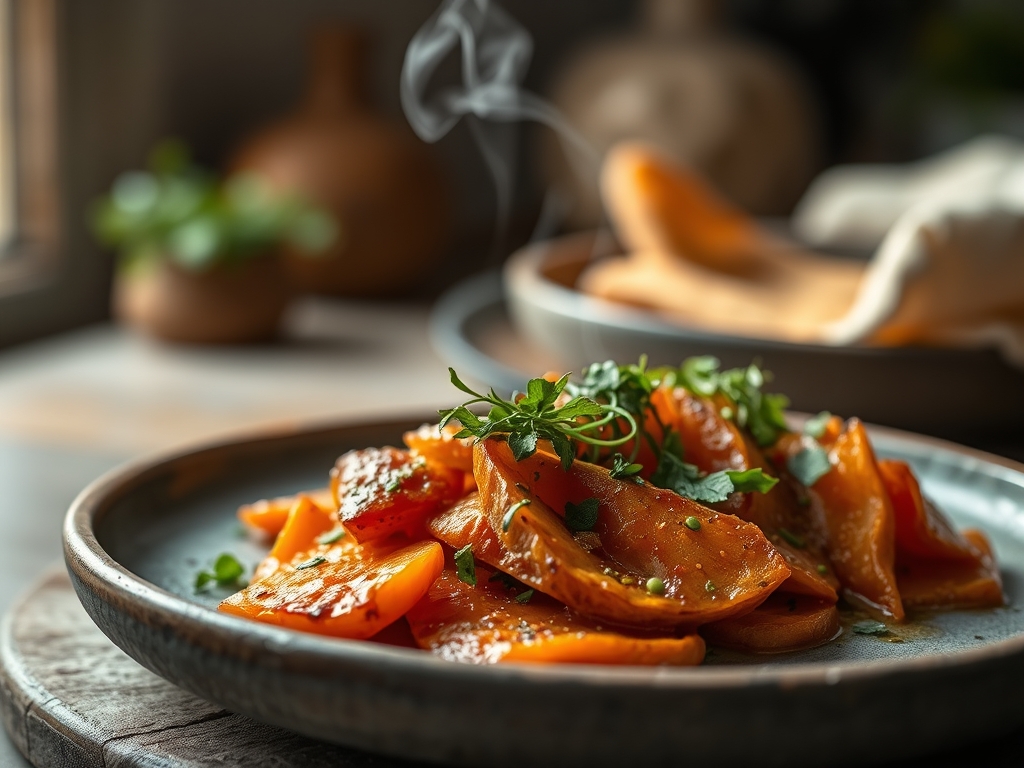
Imagine the scent of caramelized sugars meeting the sharp, earthy bite of rosemary and sea salt wafting through your kitchen. Most people treat the sweet potato like a dessert in disguise; they bury it under marshmallows and brown sugar. We are doing the opposite. By leaning into healthy savory sweet potato recipes, we unlock a complex world of umami and salt that transforms this humble tuber into a culinary powerhouse.
The magic lies in the contrast. When you pair the natural glucose of the potato with high heat and pungent fats, you trigger the Maillard reaction. This chemical dance creates hundreds of new flavor compounds that are savory, nutty, and deeply satisfying. We are moving beyond the basic bake to explore textures ranging from velvet purees to shattered-glass crispness. Grab your apron and your favorite chef's knife. We are about to redefine what a healthy dinner looks like using science and a little bit of kitchen wit.
The Gathers:
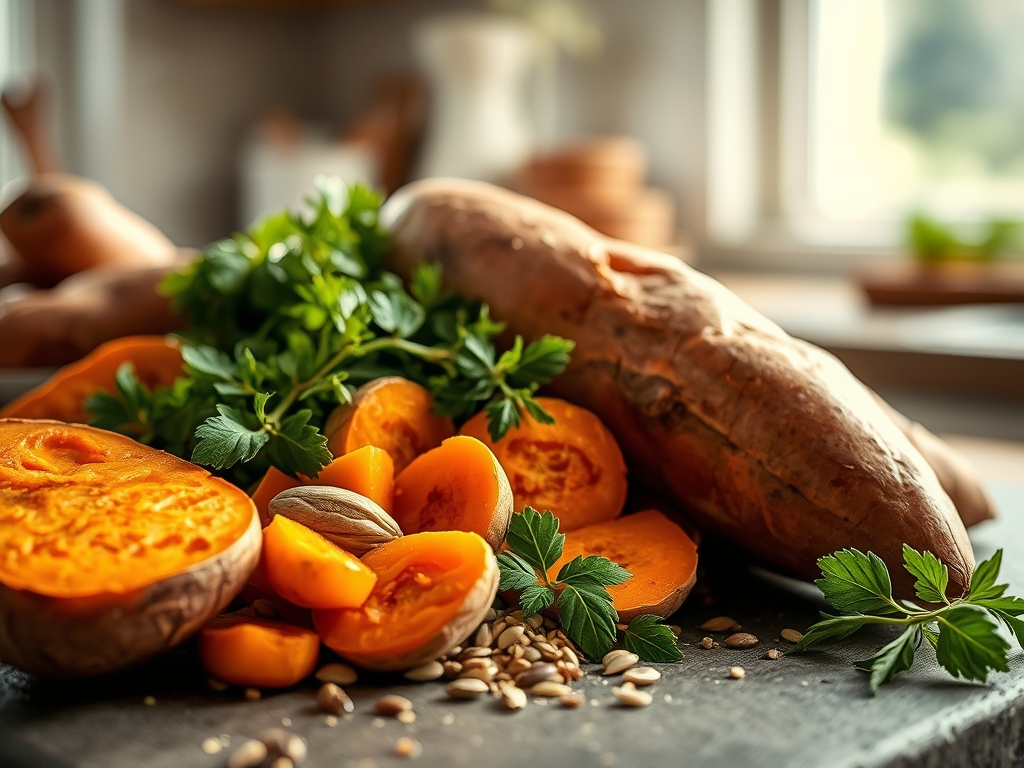
To master these healthy savory sweet potato recipes, your mise-en-place must be precise. Start with firm, jewel-toned Beauregard or Garnet potatoes. These varieties have a high moisture content which is essential for achieving a viscous interior while the skin crisps. You will also need a high-smoke-point fat like avocado oil or clarified butter to ensure you do not create acrid flavors during high-heat roasting.
Your flavor arsenal should include piquant elements like aged pecorino, smoked paprika, and fresh aromatics like garlic and thyme. Use a microplane to zest citrus or grate hard cheeses; this increases the surface area and allows the flavors to infuse the dish instantly. For smart substitutions, swap heavy cream for full-fat Greek yogurt to add a probiotic tang without the saturated fat load. If you are avoiding nightshades, replace paprika with ground cumin and coriander to maintain that earthy, savory profile.
The Clock
Efficiency in the kitchen is all about the "Chef's Flow." This means grouping your tasks to maximize your active time. Total preparation for these hacks takes approximately 20 minutes, while the oven does the heavy lifting for 45 to 60 minutes.
Start by preheating your oven and your heavy-bottomed skillet simultaneously. While the metal absorbs thermal energy, perform all your knife work. By the time your potatoes are cubed, your pan is ready for a sear. This overlapping workflow ensures that you are never standing idle. Remember that sweet potatoes are dense; they require a steady heat transfer to break down starch into maltose. Rushing the process results in a chalky texture rather than a creamy one.
The Masterclass:
1. The Hasselback Precision
Wash your potatoes and place them between two wooden spoons. Use a sharp chef's knife to slice thin rounds, stopping when the blade hits the spoons. This creates a fan effect that increases the surface area for seasoning.
Pro Tip: This technique utilizes increased surface area to maximize evaporation. As water leaves the thin slices, the remaining sugars concentrate and caramelize faster, creating a texture that mimics a potato chip while keeping the base tender.
2. The Umami Smash
Boil small sweet potatoes until fork-tender. Place them on a baking sheet and use a heavy glass or a bench scraper to flatten them to half-inch thickness. Drizzle with olive oil and salt before roasting at 425 degrees.
Pro Tip: This relies on mechanical cell rupture. By smashing the potato, you create jagged edges that crisp up exponentially better than smooth surfaces. The rough texture provides more "hooks" for oil to settle and fry the exterior.
3. The Savory Whipped Saucier
Peel and cube your potatoes, then steam them until soft. Transfer them to a saucier or a high-speed blender with garlic-infused oil, salt, and a splash of vegetable stock. Process until the mixture is perfectly aerated and light.
Pro Tip: High-speed blending breaks down the starch granules. However, be careful not to overwork them or they will become gluey. Adding a fat source early helps emulsify the mixture, coating the starch to keep the puree silky.
4. The Crispy Spiralized Nest
Use a spiralizer to create long ribbons of sweet potato. Toss them in a bowl with a light dusting of cornstarch and smoked salt. Arrange them in small nests on a parchment-lined tray and bake until golden.
Pro Tip: The cornstarch acts as a moisture wick. It absorbs the initial steam released by the potato, preventing the ribbons from becoming soggy and allowing the dry heat of the oven to create a brittle, shattered texture.
5. The Salt-Crusted Slow Roast
Coat whole, unpeeled potatoes in a thick layer of coarse kosher salt and egg white. Bake at a lower temperature for a longer duration. Crack the salt shell before serving to reveal the steamed interior.
Pro Tip: The salt crust creates a thermal chamber. It insulates the potato, ensuring even heat distribution while the salt draws out just enough moisture to intensify the natural savory notes without drying out the flesh.
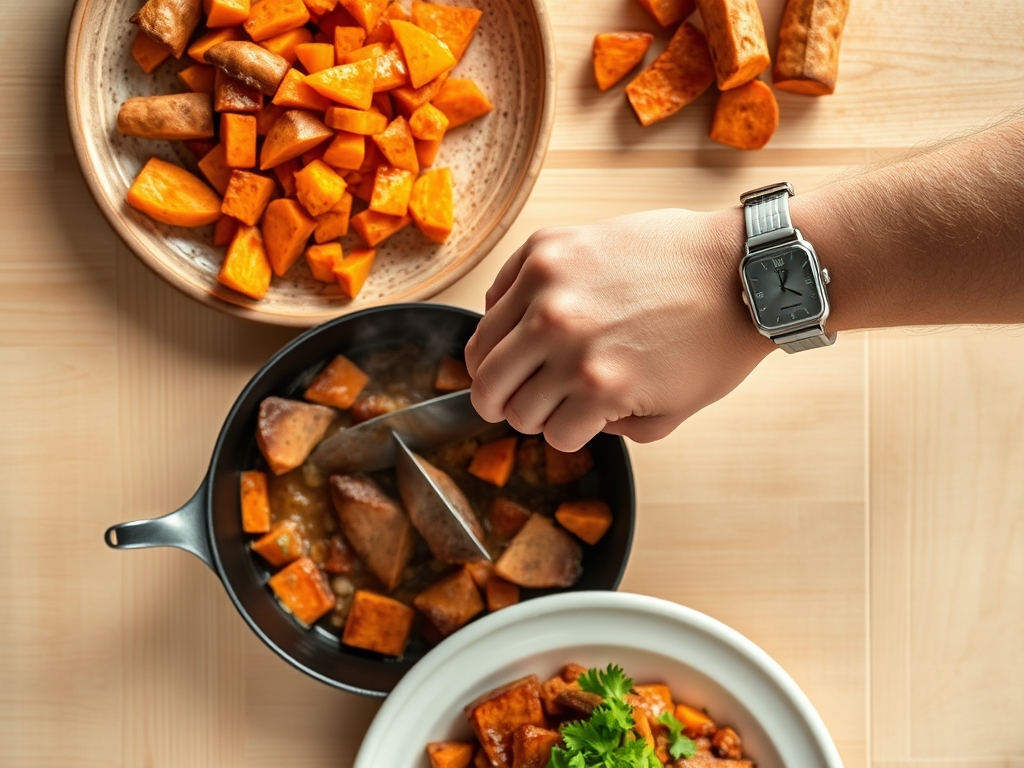
6. The Deglazed Skillet Medley
Sauté diced sweet potatoes in a heavy-bottomed skillet until a fond forms on the bottom. Add a splash of apple cider vinegar or dry white wine to deglaze the pan, scraping up all those brown bits to coat the potatoes.
Pro Tip: This process captures the fond, which is concentrated flavor resulting from the Maillard reaction. The acidity in the liquid balances the sweetness of the potato, creating a balanced, professional-grade flavor profile.
The Deep Dive
Nutritionally, sweet potatoes are a powerhouse of complex carbohydrates and Vitamin A. One medium potato provides over 400 percent of your daily requirement. When focusing on healthy savory sweet potato recipes, we keep the glycemic index lower by pairing the starch with healthy fats and fiber-rich skins. For a vegan twist, use nutritional yeast to add a cheesy, nutty flavor. For those on a Keto-leaning path, keep portions small and prioritize the high-fiber skins.
The Fix-It:
If your potatoes are "soggy," you likely overcrowded the pan. Steam becomes trapped between the pieces; give them breathing room. If they are "burnt but raw," your oven temperature is too high. Lower the heat and cover with foil to allow the center to cook via conduction. If they are "bland," you need more acid. A squeeze of lemon or a dash of vinegar brightens the savory notes instantly.
For meal prep, reheating is a science. Avoid the microwave, which turns starch into rubber. Instead, use a toaster oven or an air fryer. This re-activates the fats on the surface, restoring that "day-one" crunch through rapid convection.
The Wrap-Up
Mastering healthy savory sweet potato recipes is the ultimate kitchen flex. It proves that you understand the balance of salt, fat, and acid. By using tools like the saucier and techniques like deglazing, you elevate a pantry staple into a gourmet experience. These six hacks are just the beginning. Experiment with different spices, play with textures, and never be afraid to let those potatoes get a little extra color in the oven. Your taste buds, and your body, will thank you for the upgrade.
The Kitchen Table
What is the best way to store raw sweet potatoes?
Store them in a cool, dark, and dry place like a pantry. Never refrigerate raw sweet potatoes; the cold temperature converts their starch into sugar too quickly, which alters the flavor and creates a hard, woody center when cooked.
How do I get my sweet potato fries actually crispy?
Soak sliced potatoes in cold water for 30 minutes to remove excess surface starch. Pat them completely dry before tossing with a light coating of cornstarch and oil. Ensure the oven is fully preheated to at least 425 degrees Fahrenheit.
Can I eat the skin of the sweet potato?
Yes, the skin is highly nutritious and contains significant fiber and potassium. When roasting or frying, the skin provides a necessary structural contrast to the soft interior. Just ensure you scrub them thoroughly with a vegetable brush before cooking.
Why did my mashed sweet potatoes turn out gummy?
Gumminess occurs when you overwork the starch. Using a food processor for too long shears the starch molecules, releasing amylose. For the best texture, use a potato ricer or mash by hand, adding fats like olive oil to coat the starch.